A Nigerian couple heading to Europe via Libya was separated and forced to suffer at the hands of ruthless smugglers. Thanks to a safe house supported by the UN and the medical charity MSF, the two were eventually reunited.
Migrants continue to suffer unspeakable crimes in Libya, according to the UN. The number of people trying to cross through the African nation to Europe has grown this year: the UN migration agency, IOM, says that there are more than 500,000 registered migrants in Libya, many of whom find themselves at the mercy of human smugglers.
23-year-old Halima William crossed the desert from Nigeria to Libya in the hope of eventually reaching Europe, but was forced into prostitution. Her husband Mark, 27, also faced detention and abuse. Finally, each of them was able to escape and find refuge in a rare safe house.
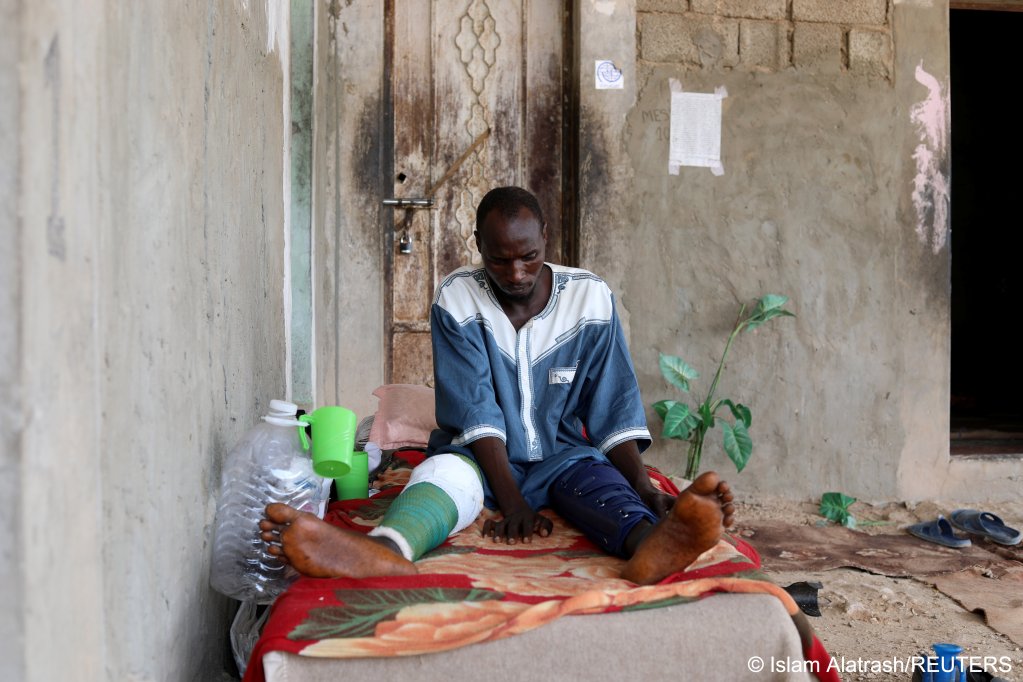
A migrant sits on a bed at a shelter called ‘Safe House’ in Bani Walid, Libya on August 18, 2021 | Photo: Islam Alatrash/REUTERS
two were later reunited by mere chance at the safe house in the town of Bani Walid, where they have been staying for the time being. While their scars are still healing, they continue to hope to reach Italy eventually.
The couple’s story is one of many examples of the risks facing migrants who are aiming to reach Europe but who instead end up trapped in a country which remains chaotic and violent.
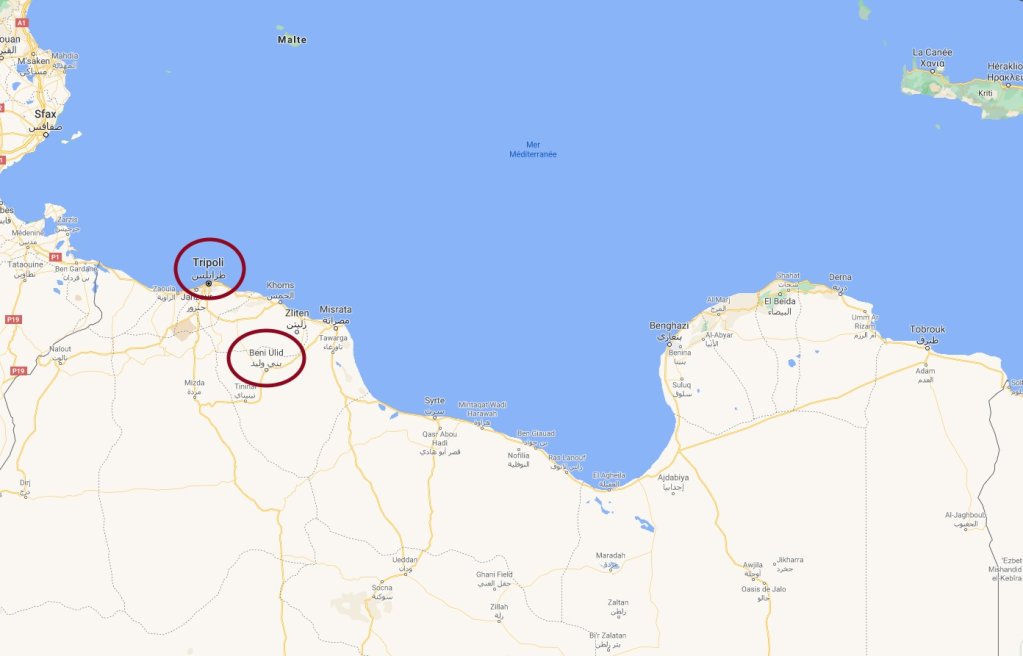
Mark left Nigeria first in 2016 and was smuggled into Libya across the desert border in a car. When he got to Bani Walid, 180 kilometers south of the Libyan capital Tripoli, he was detained by armed men and held for seven months for ransom. He eventually paid them and found work in Bani Walid as a builder, planning his reunion with Halima by phone to travel onwards.
Halima then came to Libya in 2018, using the same route as Mark. When she reached Tripoli she was sold into prostitution. Without a Libyan phone, she could not contact Mark.
Bani Walid is located 180 kilometers southeast of Tripoli | Credit: Google Maps
Tearful reunion at safe house
After four months Halima managed to escape and reach the safe house, which is supported by the United Nations and the medical charity Doctors Without Borders (MSF). The shelter provides food and medical care, and is funded by donations from locals. It has been in operation since 2015 and currently hosts 12 migrants.
Halima felt overjoyed when she found that her husband was already there: “I hug him and kiss him and start crying. He was crying too,” she told Reuters.
The founder of the safe house, Al-Hussein Bin Gharsa, said he wanted to show the true, kindly nature of Libyans and of the citizens of Bani Walid: “This is a city of generosity and hospitality.”
re roughly 700,000 foreigners living in Libya, many of them migrants who’d like to make their way to Europe. Some of those who were turned back want to try again.
Despite the recent capsize of an overloaded fishing boat packed with migrants off the Greek coast, heading from Libya to Europe, and what were likely hundreds of their deaths by drowning, Ali Majdi still wants to try and get to Europe.
The 28-year-old Syrian refugee has already tried to leave Libya for Europe once. He paid people smugglers in the coastal town of Zawiya $1,960 (€1,800) and was eventually able to board a boat crossing the Mediterranean. Majdi’s final goal is Germany, where his family now lives — he hasn’t seen them for eight years.
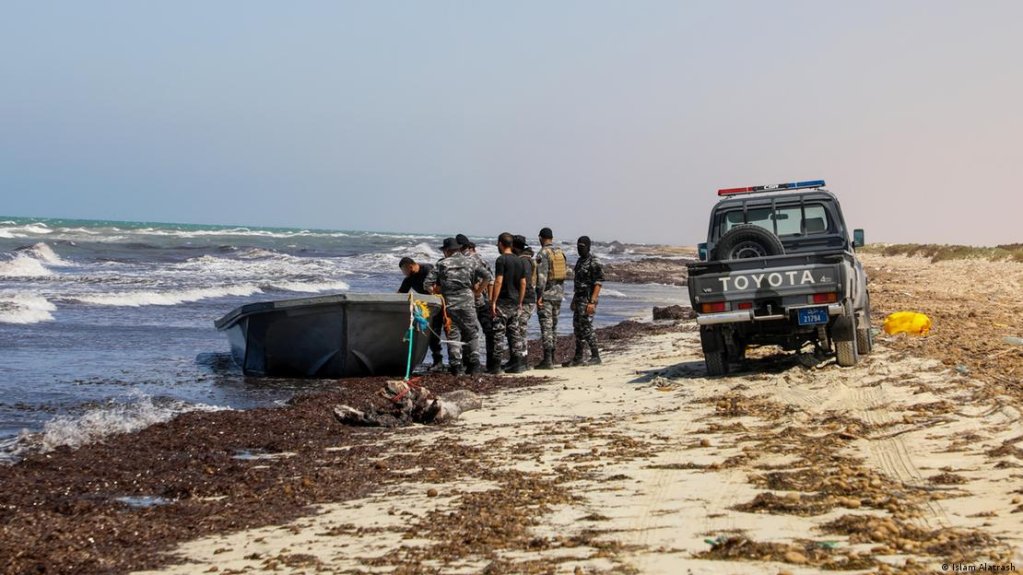
But the boat was intercepted by the Libyan coastguard and forced to return to Libya. “My hopes were shattered,” he told DW. “They forced me to come back here. I was devastated. But I’m determined to try again.”
“I know the risks,” he continued, “but I still want to sail across the Mediterranean. I need to reach Germany,” he stressed.
Libya, a hotspot for people smugglers
Majdi is just one of hundreds of thousands of foreigners in Libya. Some are happy to remain there, others are still trying to find a way out. And while Majdi was able to find a job in Libya, many migrants are in Libyan detention where they may be abused. According to United Nations numbers, there are around 706,00 migrantsin Libya, making up just over 10% of the country’s total population.
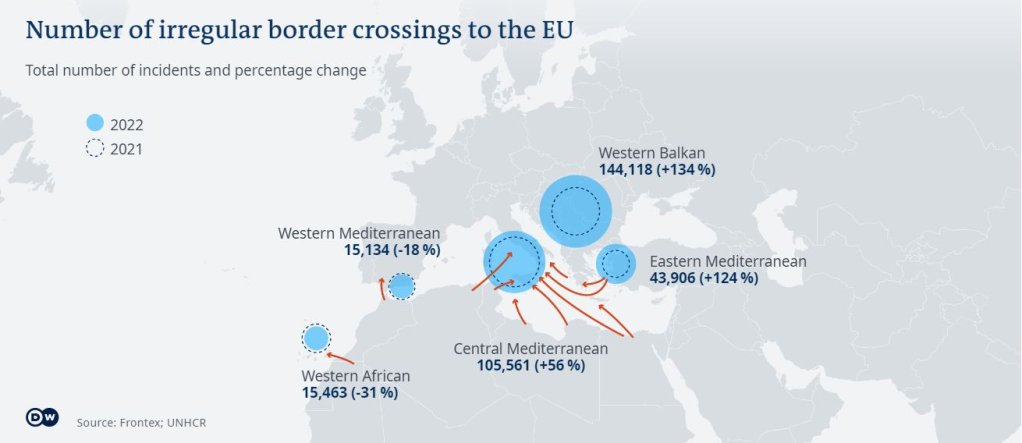
Still politically divided a decade after the revolution that toppled the country’s dictator, Moammar Gadhafi, the North African nation has become a popular waypoint for migrants — whether they’re crossing borders for economic reasons or they’re seeking asylum — because of the Libyan coastline’s relative proximity to Greek and Italian shores. More than 56,000 people made the trip across the sea to Italy in the first three months of this this year. Around half of them started their journey in Libya.
Of course, Majdi is worried about the risk that another crossing entails he told DW, and he admits that he’s also frightened of the Greek coast guard. “I’m worried they’ll stop me from reuniting with my family. Their actions towards migrants seeking safety and a better life are a terrible mistake,” he added, referring to the recent tragedy with the fishing trawler Adriana and the possibility that the Greek coastguard were somehow culpable in the deaths of hundreds of people who drowned when the overloaded boat capsized.
A new home for some migrants
Not everybody feels this way though. Rida Solan is originally from Pakistan and he too had initially wanted to come to Europe to work. Experts say that often Syrians, Pakistanis and Bangladeshis are able to fly into Libya from Syria on civilian flights before trying to make their way to Europe. People coming from elsewhere, including from Africa, often cross into Libya at land borders.
On his first attempt to get to Europe, Solan paid €2,000 ($2,175) to people smugglers in Zawiya, which is known as a hotbed of smuggling activity. But the 31-year-old was also apprehended and returned to Libya, this time by the Italian authorities.
Solan has now decided to stay put. He has managed to get a job at a juice shop in Misrata, a city around 220 kilometers (136 miles) further along the coast from Zawiya and is happy to be saving money.
“I vow not to consider migration again or risk my life,” he told DW. “And I decided to stay here and work in Misrata because it’s one of the safest cities in the country.”
Additionally, he added, “Libya is good because everything here is free, like electricity and water. So I can save more money than I could in Europe.” He is referring to the fact that the lack of a functioning state means that while electricity and water are provided, the collection of power or water bills is barely enforced, if at all.
The ‘safest’ way to Europe
the central Mediterranean route, the UN’s International Organization for Migration, or IOM, reports. The organization also said that in the same period 662 had died and 368 people were still missing.
The latter deaths and disappearances are a reason why Libya-based people smugglers promote themselves as providing a “safe journey” across the Mediterranean.
DW contacted one people smuggler advertising his services on the social media platform TikTok who boasted that he could offer “the safest trips to Europe.” In an interview conducted via the social media platform, the people smuggler, who would not give his real name, repeatedly emphasized that travelling with him was “extremely secure” and that he could organize travel between Tobruk in Libya and the Italian coastline for $2,500 per person.
Another people smuggler repeated this offer during an interview on WhatsApp. He also went on to claim his trips to Europe were the safest one could find in Libya.
Ismail, a former security guard for the Libyan government turned smuggler, further explains these kinds of promises. Ismail, who won’t give his full name or age because of the business he’s in, left his job to become a people smuggler because he earns much more money this way. After all, sometimes his government salary was not paid for months, he explained.
Irregular border crossings to the EU | Credit: DW Irregular border crossings to the EU | Credit: DW
Ismail also uses TikTok to attract customers and he spoke to DW via the platform’s direct messaging. He admits that his promotional videos on TikTok depict an unrealistic scenario of what life would be like for migrants once they reach their destination.
Migrants pay Ismail and his colleagues between $500 and $2,000 for the trip, depending on the kind of risks they’re willing to take. The lower prices get them a ride on a rubber inflatable which might take between 50 and 200 people aboard, and which is clearly more perilous. The highest prices include a bribe for Libyan border guards who help hide the migrants on commercial shipping.
“The work is hard and tiring,” he wrote to DW. “But it’s very profitable and I make an average of about two trips a week.”
A legal path to migration?
A coastguard staffer in Zawiya told DW that as long as assisting the migrants to leave Libya is so profitable, nothing will stop this business. He spoke off the record because he was not supposed to talk to journalists.
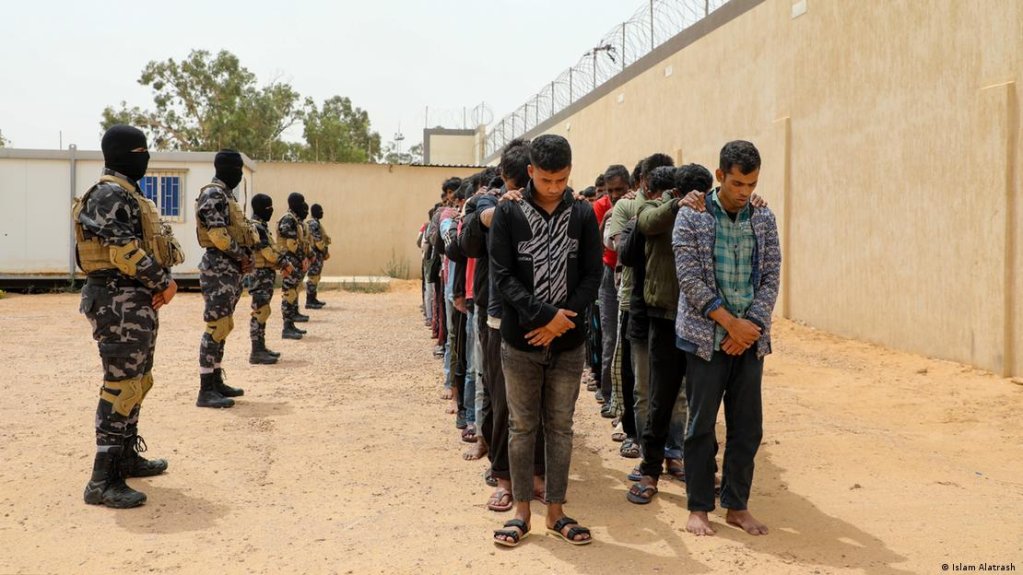
Experts and advocates in the field say that current policies to police the central Mediterranean route are not working and are leading to more deaths at sea and more abuses by people smuggling networks in Libya. An April 2023 investigation by the United Nations reported that there were “grave and widespread human rights violations” and “reasonable grounds to believe that crimes against humanity were committed” against migrants in Libya.
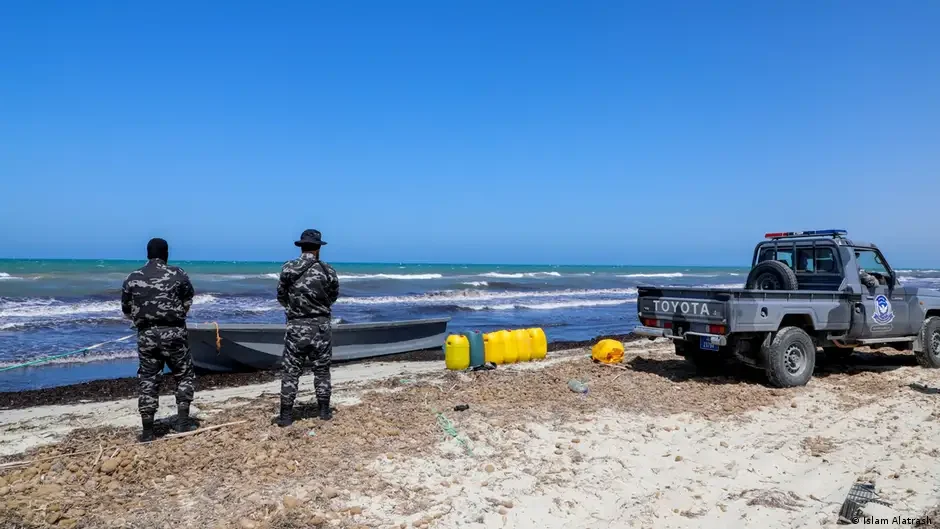
Libyan authorities are trained and funded by the EU to police migration
The European Union should be doing far more to help the would-be migrants stuck in Libya as well as those who still want to leave for EU countries, Marwa Mohamed, head of outreach at the advocacy organization, Lawyers for Justice in Libya, argued in a 2022 op-ed for the European Center for Refugees and Exiles. Offering migrants in Libya a legal pathway to migration would not only help them and prevent deaths and abuses, it would also help European countries solve their looming labor crises, she wrote.
“Committing to a rights-based and collaborative response to migration flows is the best way to protect migrants and refugees from grave crimes and serious human rights violations along the central Mediterranean route,” Mohamed concluded. “Doing so would contribute to the fight against the transnational crime of human trafficking by eradicating the demand and ultimately disempowering smuggling and trafficking networks.”
This article, originally published on DW, has been updated by InfoMigrants.
Cathrin Schaer contributed to this story from Berlin.
Author: Islam Alatrash
First published: July 9, 2023
Copyright DW – All rights reserved
DW is not responsible for the content of external websites